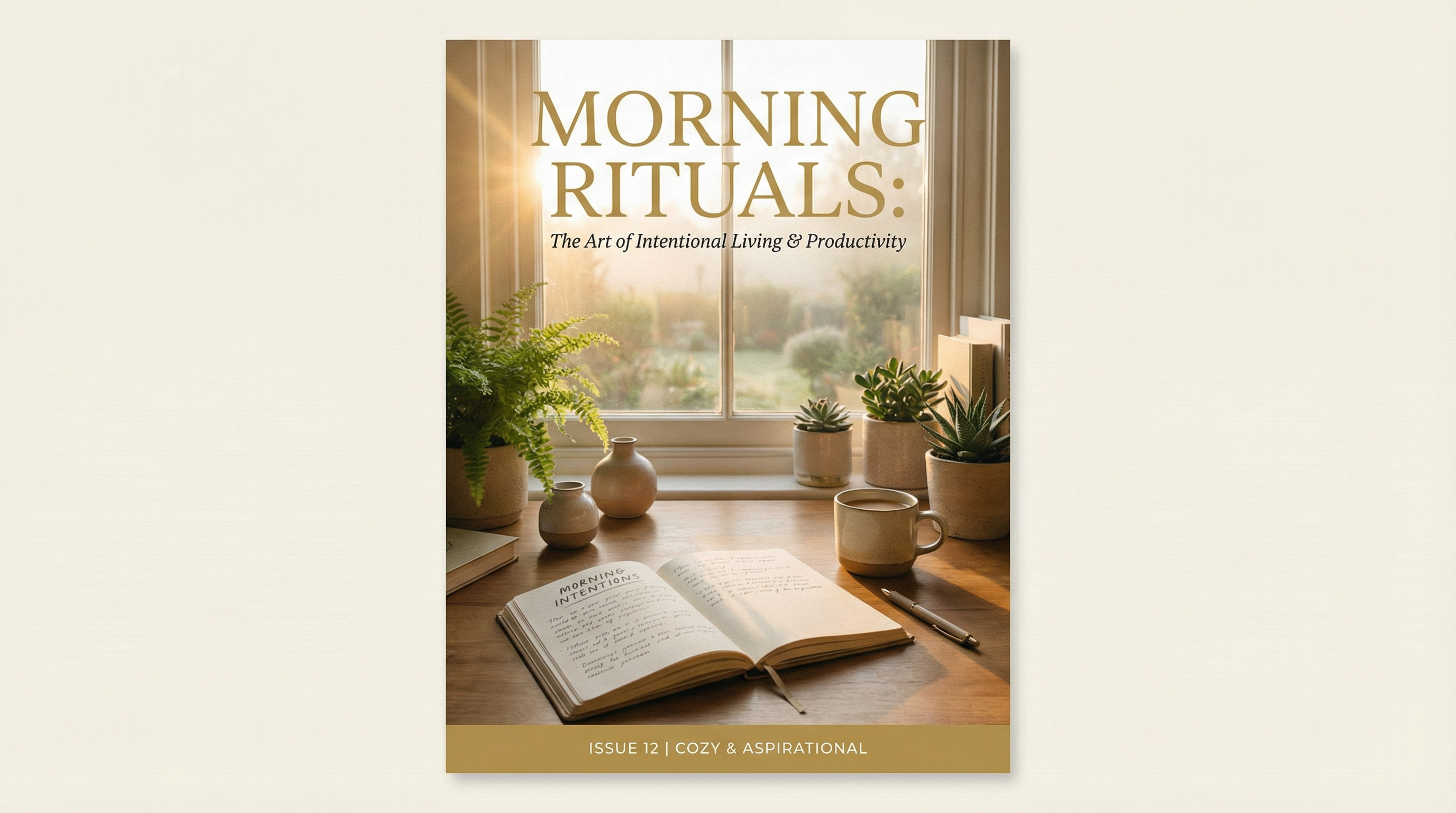
I used to think successful people had some secret advantage—more time, more talent, more luck. Then I started studying them closely and discovered something surprising: the advantage wasn't in what they had, but in what they did consistently.
The most successful people I've met don't have 30-hour days. They have the same 24 hours as everyone else. The difference is how they start those hours.
Let me share the 30-minute morning routine that has transformed my productivity, clarity, and results.
Why Mornings Matter
Before I break down the routine, let's talk about why mornings are so powerful.
Your morning sets the tone for your entire day. Win the morning, and you've created momentum that carries you through challenges. Lose the morning—scrolling social media, hitting snooze, reacting to emails—and you're playing catch-up for the rest of the day.
The first 30 minutes after you wake up are when your mind is most receptive. Your subconscious is still close to the surface. The mental clutter of the day hasn't accumulated yet. This is prime time for programming your mind for success.
The 30-Minute Breakdown
Here's exactly how I spend my first 30 minutes:
Minutes 1-5: Gratitude
Before my feet hit the floor, I think of three things I'm grateful for. Not generic things—specific things from the last 24 hours.
Maybe it's a conversation with Olivia that made me laugh. Maybe it's progress on a project. Maybe it's just the fact that I woke up with another chance to make an impact.
Gratitude isn't just feel-good fluff. It's a neurological reset. It shifts your brain from scarcity mode (what's wrong, what's missing, what's threatening) to abundance mode (what's working, what's possible, what's good).
Minutes 5-15: Movement
I don't do an intense workout first thing—that comes later. But I do move my body intentionally for 10 minutes.
Sometimes it's stretching. Sometimes it's a walk around the block. Sometimes it's just standing and doing some basic exercises. The goal isn't to get fit in these 10 minutes—it's to wake up my body and get blood flowing to my brain.
Physical movement changes your state faster than almost anything else. When you're stuck in your head, get into your body.
Minutes 15-25: Input
This is when I feed my mind with something valuable. Usually it's reading—a chapter from a book on business, personal development, or biography. Sometimes it's listening to a podcast or watching a training video.
The key is intentionality. I'm not consuming content randomly. I'm strategically inputting ideas that will help me grow. I'm learning from people who have achieved what I want to achieve.
Two books that changed my life during this practice: "What to Say When You Talk to Yourself" by Shad Helmstetter (the power of self-talk and neuro-linguistic programming) and "DotCom Secrets" by Russell Brunson (the book I was reading when I took that walk that changed everything).
Minutes 25-30: Intention
The final five minutes are for setting my intention for the day. I ask myself:
What's the ONE thing that, if I accomplish it today, will make everything else easier or unnecessary?
I write it down. I visualize completing it. I connect it to my bigger goals and purpose.
This isn't a to-do list—it's a priority declaration. It's deciding in advance what matters most, so when distractions come (and they will), I have a clear anchor to return to.
Why This Works
This routine works because it addresses the three pillars of high performance:
State: Gratitude and movement put you in an optimal emotional and physical state. You can't perform at your best when you're stressed, tired, or negative.
Strategy: The input phase ensures you're constantly learning and improving. You're not just working hard—you're working smart, informed by the best thinking available.
Focus: The intention phase creates clarity. You know exactly what matters most, so you can say no to everything else without guilt.
The Compound Effect
Here's what most people miss about routines: the power isn't in any single day. It's in the compound effect over time.
30 minutes might not seem like much. But 30 minutes every day for a year is 182 hours of intentional personal development. That's more than most people invest in themselves in a decade.
Small, consistent actions beat sporadic heroic efforts every time. The person who reads 10 pages a day will read more books in a year than the person who binges occasionally. The person who exercises 15 minutes daily will be healthier than the person who does intense workouts once a month.
Consistency is the secret weapon that nobody talks about because it's not sexy. But it's the difference between dreaming about success and actually achieving it.
Making It Your Own
My 30-minute routine works for me, but yours might look different. The specific activities matter less than the principles:
- Start with mindset. Prime your mental state before diving into tasks.
- Move your body. Physical and mental energy are connected.
- Feed your mind. Intentional input leads to better output.
- Set your focus. Know what matters before the day decides for you.
Experiment. Adjust. Find what works for your life, your goals, your personality. The best routine is the one you'll actually do.
The Challenge
Here's my challenge to you: try this for 30 days. Just 30 minutes each morning for 30 days.
Don't try to be perfect. Some days you'll nail it. Some days you'll only get through part of it. Some days you'll skip it entirely. That's okay. The goal is progress, not perfection.
But commit to the experiment. Give it a real chance. And pay attention to what changes—not just in your productivity, but in your energy, your clarity, your sense of control over your life.
I believe that how you start your day is how you live your life. Start intentionally, and watch everything else fall into place.