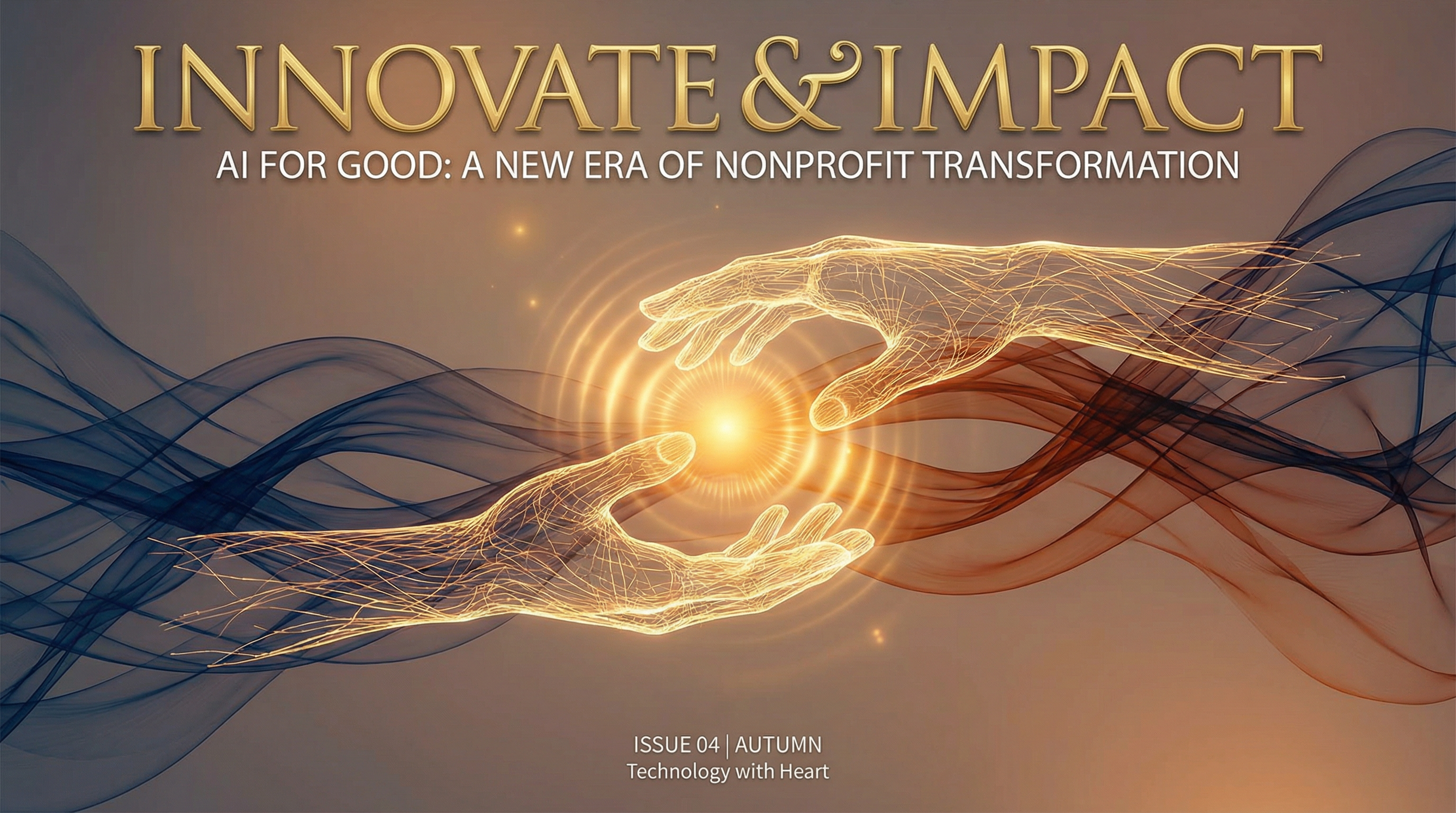
When I took the helm at Hope To Light Foundation alongside my wife Olivia, I brought something rare to the nonprofit world: deep expertise in AI-powered systems and digital infrastructure.
The result? A transformation that shows what's possible when operational excellence meets mission-driven purpose.
This isn't a story about technology for technology's sake. It's a story about using every available tool to maximize impact for the people who need it most.
The Challenge: Impact Without Reach
Hope To Light Foundation's mission is powerful: bringing hope and light to communities in need, particularly during the holiday season through our Light the Shelves campaign and year-round through various initiatives.
But here's the hard truth about nonprofit work: impact without reach is potential left unrealized.
You can have the most meaningful mission in the world, but if you can't get your message in front of the right people, if you can't convert awareness into action, if you can't scale your operations efficiently—your impact will always be limited.
When we looked at Hope To Light's operations, we saw enormous potential being constrained by manual processes, inconsistent systems, and the kind of operational friction that plagues most small nonprofits.
The Vision: Technology as a Force Multiplier
My approach wasn't to simply "do more"—it was to build systems that multiply every effort.
Think about it this way: if you can spend an hour creating a piece of content that reaches 100 people, that's valuable. But if you can spend that same hour creating a system that automatically repurposes that content across 10 platforms, reaching 10,000 people? That's transformation.
This is the AI-first philosophy we brought to Hope To Light.
The AI-First Philosophy in Practice
Rather than treating AI as a buzzword or a nice-to-have, we integrated it into every operational layer:
Content Creation at Scale
One of the biggest bottlenecks for nonprofits is content. You need to constantly communicate with donors, volunteers, beneficiaries, and the broader community. But creating quality content takes time—time that's always in short supply.
We implemented AI-assisted writing and editing workflows that maintain our authentic voice while dramatically increasing output. The key word is "assisted"—AI doesn't replace human creativity and judgment, it amplifies it.
A blog post that used to take 4 hours now takes 1. An email sequence that used to take a week to write now takes a day. This isn't about cutting corners—it's about removing friction so we can focus on what matters.
Audience Intelligence
Understanding who needs to hear your message—and when they're most receptive—is crucial for any organization, but especially for nonprofits where every dollar of marketing spend needs to count.
We use AI-powered analytics to understand our audience segments, predict optimal send times, and personalize messaging at scale. The result: higher open rates, better engagement, and more efficient use of our limited resources.
Operational Automation
Every nonprofit has dozens of repetitive tasks that consume staff time: data entry, report generation, follow-up emails, scheduling, and more. Each of these tasks is a candidate for automation.
We systematically identified and automated these processes, freeing up our team to focus on high-value activities that actually require human judgment and creativity.
The Infrastructure Stack
Beyond AI, we built a comprehensive digital infrastructure that works together seamlessly:
Livestream Systems
Live video is one of the most powerful tools for nonprofit engagement. It creates immediacy, authenticity, and connection that pre-recorded content can't match.
Our livestream infrastructure includes:
- Multi-platform broadcasting: Simultaneous streams across YouTube, Facebook, and dedicated platforms
- Automated production: Lower thirds, graphics, and transitions that run without manual intervention
- Replay optimization: Every live session becomes evergreen content through intelligent repurposing
During our Light the Shelves campaign, we ran multiple Facebook Lives that drove significant engagement and donations. The production quality rivaled organizations with much larger budgets because we had built systems that handled the technical complexity automatically.
Funnel Architecture
"Funnel" might sound like corporate jargon, but it's simply the journey someone takes from first hearing about you to taking meaningful action.
Our funnel architecture includes:
- Lead capture systems: Strategically placed opt-ins that convert visitors into community members
- Nurture sequences: Automated email journeys that educate, inspire, and activate
- Conversion optimization: Continuous testing and refinement to maximize every touchpoint
Email Marketing Engine
Email remains one of the most effective channels for nonprofit communication, but only if done well.
Our email infrastructure features:
- Segmentation intelligence: Messages tailored to where each person is in their journey
- Behavioral triggers: Automated responses to actions that feel personal, not robotic
- Deliverability excellence: Technical infrastructure that ensures messages actually reach inboxes
Systems Thinking: The Secret Sauce
The real magic isn't in any single tool or platform—it's in how everything connects.
Every piece of our infrastructure talks to every other piece:
- CRM data informs email segmentation
- Email engagement triggers funnel progression
- Funnel data shapes content strategy
- Content performance refines audience targeting
This creates a virtuous cycle where each component makes every other component more effective. The whole becomes greater than the sum of its parts.
The Results
The transformation has been dramatic:
Dramatically Expanded Reach: Our content now finds its audience instead of hoping to be found. We're reaching more people with the same (or less) effort.
Increased Engagement: Community members feel seen and valued because our communications are relevant and timely, not generic and sporadic.
Operational Efficiency: We're achieving more impact with the same resources. Staff time goes to high-value activities, not administrative busywork.
Sustainable Growth: Our systems scale without breaking. As we grow, our infrastructure grows with us.
Lessons for Mission-Driven Organizations
If you're leading a nonprofit or mission-driven organization, here's what I want you to take away:
1. Technology Serves Mission
Never implement technology for its own sake. Every tool, every system, every automation should directly serve your mission. If it doesn't make you more effective at achieving your purpose, it's a distraction.
2. Build for Scale from Day One
Even if you're small now, build systems that can grow with you. The time you invest in infrastructure today pays dividends for years to come.
3. Automate the Repeatable
Identify every task that happens more than once and ask: "Can this be automated?" Your team's time is precious—don't waste it on work that machines can do.
4. Measure What Matters
Data without insight is just noise. Focus on the metrics that actually indicate progress toward your mission, and build systems that track them automatically.
The Bigger Picture
Hope To Light Foundation's transformation isn't just about one organization becoming more efficient. It's a proof of concept for what's possible when mission-driven leaders embrace modern tools and systems thinking.
The nonprofit sector is often years behind the for-profit world in technology adoption. But it doesn't have to be that way. The same tools that help businesses scale can help nonprofits multiply their impact.
If you're doing important work in the world, you owe it to your mission to operate as effectively as possible. That means embracing AI, building systems, and constantly asking: "How can we do more with what we have?"
The world needs what you're building. Don't let operational friction hold you back.