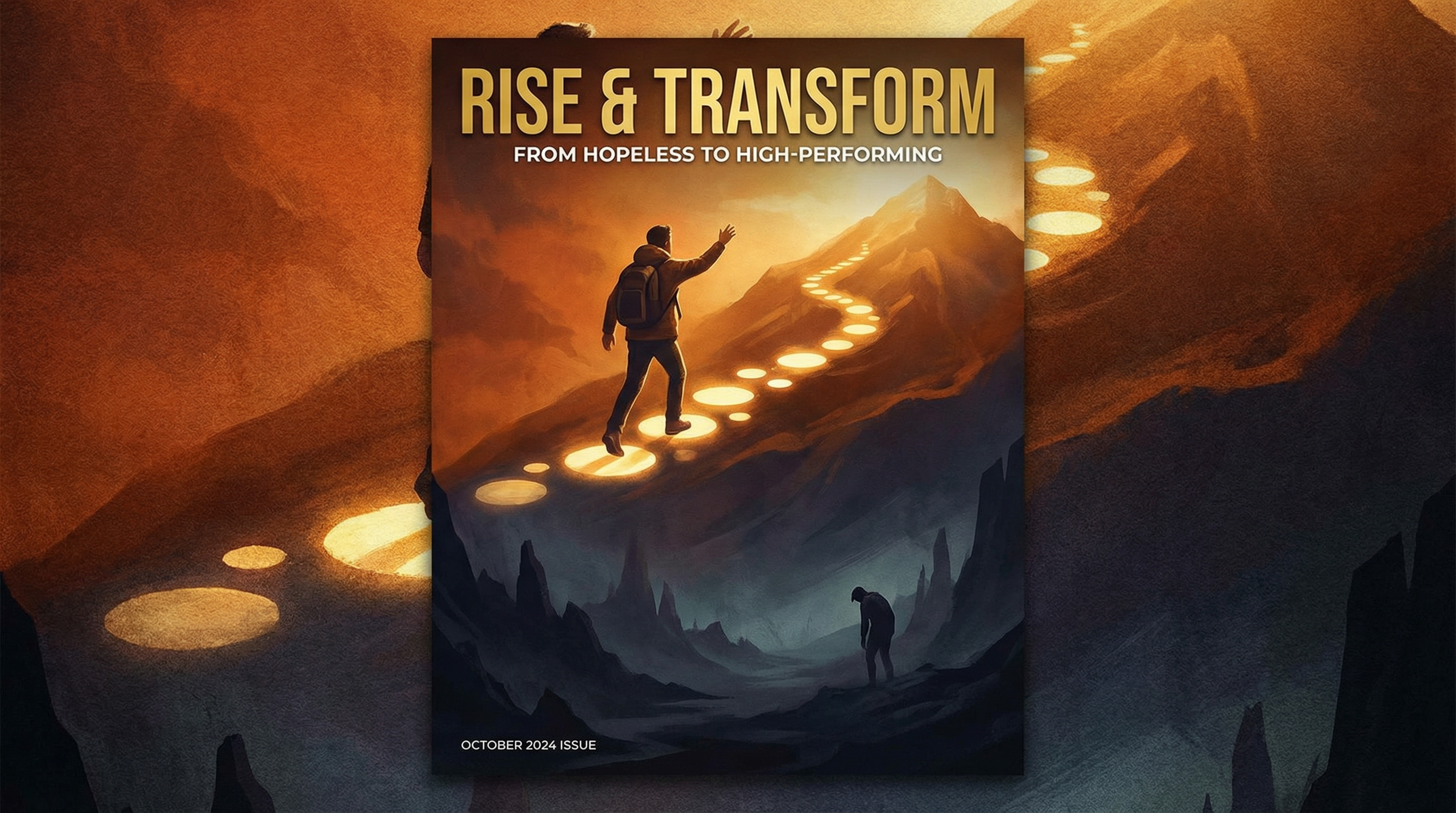
Let me tell you something that took me years to understand: failure isn't the opposite of success. It's part of it.
Every entrepreneur, every creator, every person who has ever achieved anything meaningful has a graveyard of failures behind them. The difference between those who succeed and those who don't isn't the absence of failure—it's what they do after they fail.
Are you ready to bounce back? Here are five principles that have helped me transform setbacks into comebacks.
1. Take a Break (But Don't Disappear)
When failure hits, your first instinct might be to either push harder immediately or retreat completely. Both are mistakes.
Instead, give yourself permission to step back—but with intention. Do something different for a while. Go for a walk. Spend time with people who energize you. Let your mind process what happened without forcing it.
This isn't about running away from the failure. It's about creating the mental space needed to see it clearly. When you're in the middle of the storm, you can't see the whole picture. Sometimes you need distance to gain perspective.
But here's the key: set a deadline for your break. A day. A weekend. A week at most. Then commit to coming back and facing what happened.
2. Evaluate and Learn
Once you've created some distance, it's time to get honest with yourself. This is where most people stumble—they either blame everything on external factors or spiral into self-criticism. Neither helps.
Instead, ask yourself three questions:
What actually went wrong? Not what you wish had happened. Not what you think should have happened. What actually happened? Be specific. Be factual. Strip away the emotion and look at the reality.
What needs fixing? Some failures reveal fundamental flaws that need to be addressed. Others are just bad luck or timing. Understanding the difference is crucial. Don't try to fix what isn't broken, but don't ignore what is.
What needs to be different next time? This is where learning happens. Every failure contains a lesson—usually several. Your job is to extract those lessons so the failure wasn't wasted.
3. Make Important Decisions
Here's a truth that might be uncomfortable: not every failure is worth bouncing back from.
Sometimes the lesson is that you were pursuing the wrong thing. Sometimes the failure is the universe's way of redirecting you toward something better. Sometimes the smartest move is to let go and move on.
Ask yourself honestly: Should I try again, or should I pivot?
There's no shame in pivoting. Some of the most successful people in history found their calling only after abandoning something that wasn't working. The key is making this decision consciously, not reactively.
If you decide to try again, commit fully. If you decide to move on, do so without regret. The worst place to be is in the middle—half-committed, half-doubting, unable to give your full energy to anything.
4. Plan and Gather Resources
Once you've decided to bounce back, it's time to get strategic. Enthusiasm alone won't carry you—you need a plan.
Think about three categories of resources:
People: Who do you need on your team? Who has expertise you lack? Who can provide support, accountability, or connections? Don't try to do everything alone. The myth of the solo entrepreneur is exactly that—a myth.
Materials and Tools: What do you need to execute your plan? What systems, software, or equipment will make the difference? Invest in the tools that will multiply your effort.
Money: Be realistic about the financial requirements. How much runway do you need? Where will the funding come from? Having a clear financial picture prevents the kind of desperation that leads to bad decisions.
5. Act
Here's where everything comes together—or falls apart.
You can take all the breaks you need. You can evaluate endlessly. You can make decisions and gather resources until you're perfectly prepared. But none of it matters if you don't act.
Action is the bridge between failure and success. It's the only thing that transforms lessons into results.
Start before you're ready. You'll never feel completely prepared. The confidence you're waiting for comes from doing, not from planning. Take imperfect action today rather than perfect action never.
The Bounce-Back Mindset
Beyond these five steps, there's a deeper shift that needs to happen. You need to change your relationship with failure itself.
Stop seeing failure as a verdict on your worth. It's not. It's data. It's feedback. It's information about what works and what doesn't.
The most successful people I know have failed more times than most people have tried. They've just learned to fail forward—to use each setback as a stepping stone rather than a stopping point.
You're not defined by your failures. You're defined by what you do after them.
Your Next Step
If you're reading this in the aftermath of a failure, I want you to know something: the fact that you're seeking guidance is already a sign of strength. Weak people make excuses. Strong people look for solutions.
Take the break you need. Do the honest evaluation. Make the hard decisions. Gather your resources. And then—act.
The world needs what you have to offer. Don't let one failure—or ten, or a hundred—stop you from sharing it.
Bounce back. The best is yet to come.